Indonesia
- English
- Español
- Português
- русский
- Français
- 日本語
- Deutsch
- tiếng Việt
- Italiano
- Nederlands
- ภาษาไทย
- Polski
- 한국어
- Svenska
- magyar
- Malay
- বাংলা ভাষার
- Dansk
- Suomi
- हिन्दी
- Pilipino
- Türkçe
- Gaeilge
- العربية
- Indonesia
- Norsk
- تمل
- český
- ελληνικά
- український
- Javanese
- فارسی
- தமிழ்
- తెలుగు
- नेपाली
- Burmese
- български
- ລາວ
- Latine
- Қазақша
- Euskal
- Azərbaycan
- Slovenský jazyk
- Македонски
- Lietuvos
- Eesti Keel
- Română
- Slovenski
- मराठी
- Srpski језик

Secondary energy efficiency oil-immersed transformer - comprehensive analysis of S20 series energy-saving distribution transformers
Against the background of the promotion of the national "dual carbon" strategy and the full implementation of GB 20052-2020 "Energy Efficiency Limits and Energy Efficiency Levels of Power Transformers", secondary energy efficiency oil-immersed transformers (typically represented by the S20 series) have become the mainstream selection for industrial power distribution, urban distribution network transformation and new energy projects. Compared with the traditional S11/S13 type, it has outstanding performance in reducing no-load loss and load loss, taking into account energy saving benefits and investment return.
I. What is a secondary energy efficiency oil-immersed transformer?
Secondary energy efficiency oil-immersed transformers refer to three-phase oil-immersed distribution transformers that comply with the secondary energy efficiency limits in GB 20052-2020 (and the updated version GB 20052-2024). Common models are marked as S20-M (fully sealed) series, with capacities ranging from 30 to 2500kVA. The voltage levels are usually 6/10/20kV (high voltage side) and 0.4kV (low voltage side).
• First-level energy efficiency: lowest loss (such as S22/SH21 amorphous alloy), suitable for long-term full load scenarios
• Level 2 energy efficiency: Compared with level 3 energy efficiency, the no-load loss is reduced by about 10% to 20%, and the load loss is reduced by about 5% to 15% – that is, the S20 series
• Level 3 energy efficiency: minimum market entry threshold (such as part S13), new projects will be gradually phased out
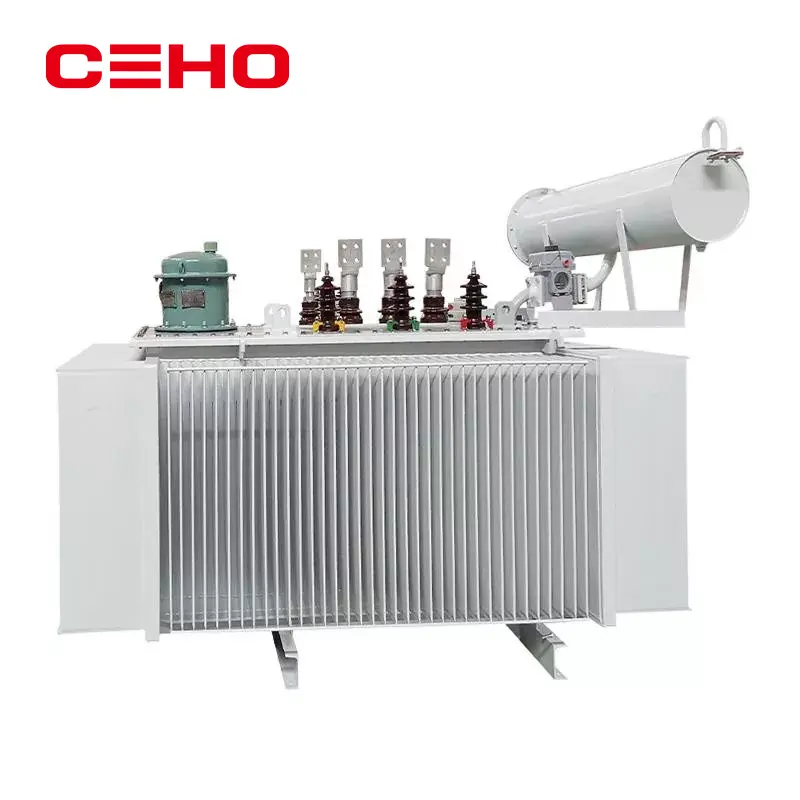
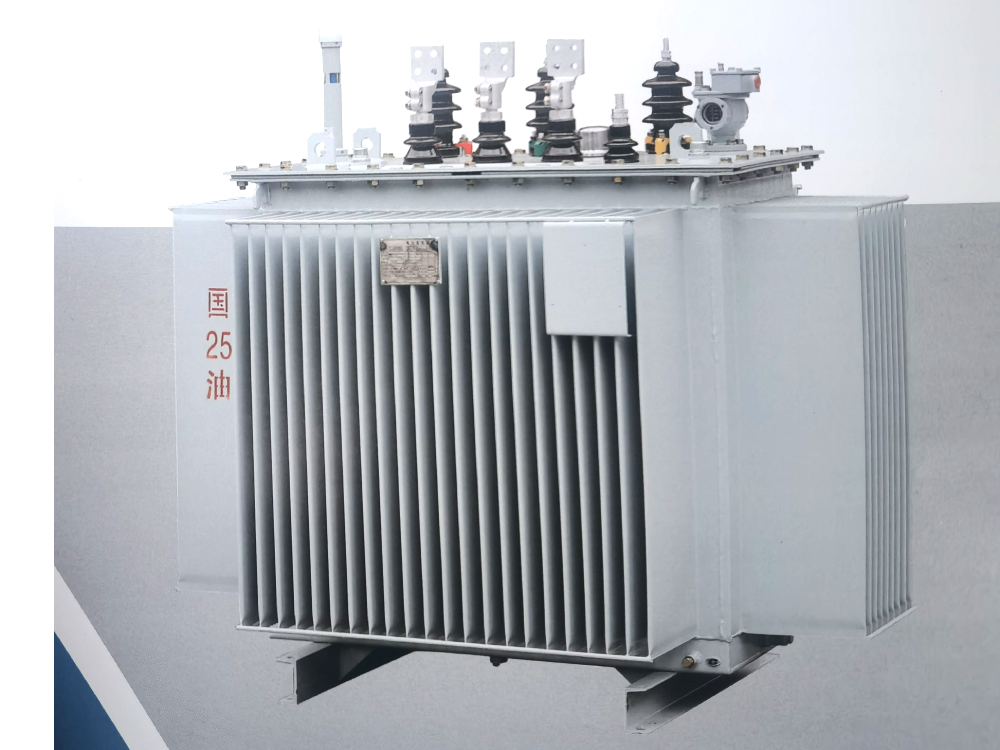
As a high-efficiency and energy-saving power equipment, the structural design of the secondary energy-efficiency oil-immersed transformer has been optimized to meet the requirements of the new energy efficiency standards. This type of transformer is mainly composed of core components such as core, windings, and oil tanks. Each component complements each other in function and jointly ensures the efficient operation of the transformer. As the core of the magnetic circuit of the transformer, the iron core is usually made of laminated silicon steel sheets with high magnetic permeability. Its cross-sectional form has an important influence on the electrical and structural performance parameters of the transformer. The winding is the circuit part of the transformer. It realizes the voltage conversion function through a reasonable turns ratio. Its wire material and arrangement directly affect the load loss and short-circuit impedance of the transformer. The oil tank not only provides mechanical support for the transformer, but also achieves heat dissipation and insulation functions through the circulating flow of internal insulating oil, thereby ensuring the stability and reliability of the transformer in long-term operation.
II. Working principle
The working principle of the two-stage energy-efficient oil-immersed transformer is based on the law of electromagnetic induction, and the conversion between the input voltage and the output voltage is achieved through the action of an alternating magnetic field. When the primary winding is connected to the AC power supply, the alternating current generated in the winding will excite alternating magnetic flux in the core, thereby inducing an induced electromotive force in the secondary winding. This electromagnetic induction process allows the transformer to flexibly adjust the voltage level without changing the total amount of electric energy, thereby meeting the needs of different application scenarios.
In oil-immersed transformers, the role of insulating oil is crucial. On the one hand, insulating oil, as an excellent insulating medium, can effectively isolate the high-voltage part between the winding and the core, preventing equipment failure due to electrical breakdown; on the other hand, insulating oil takes away the heat generated during the operation of the transformer through natural convection or forced circulation, ensuring that the equipment maintains a reasonable temperature rise range under rated load. This efficient heat dissipation mechanism not only extends the service life of the transformer, but also ensures its stable operation under high load conditions. Therefore, the secondary energy efficiency oil-immersed transformer achieves the goal of high efficiency and energy saving through scientific and reasonable design, making full use of the principle of electromagnetic induction and the characteristics of insulating oil.
III. Performance characteristics
1.Heat dissipation performance
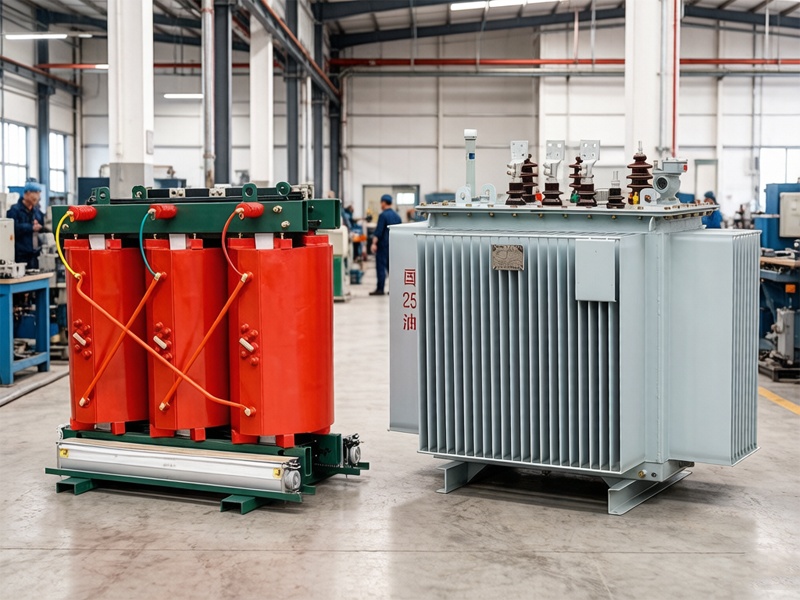
Oil-immersed transformers exhibit significant advantages in heat dissipation performance due to their unique heat dissipation mechanism. During operation, the transformer oil absorbs the heat generated by the windings and core through natural convection or forced circulation, and transfers it to the surface of the oil tank for heat dissipation. This efficient heat dissipation method can not only effectively control the temperature rise inside the transformer, but also extend the service life of the equipment. Research shows that the heat dissipation efficiency of oil-immersed transformers is about 20% higher than that of dry-type transformers, which is mainly due to the high heat capacity and high thermal conductivity of insulating oil.
In addition, the heat dissipation design of the secondary energy-efficiency oil-immersed transformer has been further optimized. For example, the heat dissipation capacity is significantly improved by increasing the surface area of the fuel tank, setting up heat sinks or adopting a forced air cooling system. Especially under high-load operating conditions, these optimization measures ensure that the internal temperature of the transformer is always maintained within a reasonable range, thus avoiding the risk of performance degradation or failure due to overheating. Therefore, the advantages of secondary energy-efficiency oil-immersed transformers in heat dissipation performance have laid a solid foundation for their wide application in the industrial and construction fields.
2. Fully sealed corrugated fuel tank structure
It adopts a fully sealed corrugated oil tank (no oil conservator or internal oil conservator). The corrugated sheet automatically expands and contracts as the oil temperature changes to compensate for the oil volume and isolate air and moisture intrusion - reducing the aging of the insulating oil. It is basically maintenance-free and has a design life of up to 30 years.
3. High reliability and security
• Short circuit impedance: 4% (≤630kVA) / 4.5%~6% (large capacity)
• Enhanced short-circuit resistance: Improved winding support and tie-plate structures to withstand 31.5kA level short-circuit electric force
• Standard pressure relief valve, gas relay interface, signal thermometer
• Protection level IP44 (outdoor type), noise is usually ≤50dB(A), suitable for residential areas/commercial buildings
IV. Typical technical parameters (excerpt from S20 10kV series)
|
Capacity (kVA) |
Connection group |
High voltage (kV) |
Tap (%) |
Low voltage (kV) |
No-load loss (W) |
Load loss (W) |
Impedance (%) |
| 100 |
Dyn11/Yyn0 |
10 |
±2×2.5% |
0.4 | 135 | 1265 | 4.0 |
| 200 |
Dyn11/Yyn0 |
10 |
±2×2.5% |
0.4 | 215 | 2185 | 4.0 |
| 400 |
Dyn11/Yyn0 |
10 |
±2×2.5% |
0.4 | 370 | 3615 | 4.0 |
| 500 |
Dyn11/Yyn0 |
10 |
±2×2.5% |
0.4 | 430 | 4330 | 4.0 |
| 800 |
Dyn11/Yyn0 |
10 |
±2×2.5% |
0.4 | 630 | 6000 | 4.5 |
| 1000 |
Dyn11/Yyn0 |
10 |
±2×2.5% |
0.4 | 745 | 8240 | 4.5 |
Note: The specific values are slightly different due to the manufacturer's process, and are subject to the type test report.
V. Main application scenarios
• Industrial enterprises/industrial parks: continuous operation, high load rate (>30%), short energy saving recovery cycle
• Commercial complex/office building: low noise, fully sealed and maintenance-free, suitable for basement or outdoor box transformer
• Urban power grid renovation/old residential areas: replace high-loss S7/S9/S11 transformers to reduce distribution network line losses
• New energy supporting facilities: distributed photovoltaic boost and energy storage system access (some customizable anti-harmonic designs are available)
• Rural power grid/Taiwan area transformation: obvious effect in reducing no-load losses and improving power supply quality
VI. Selection suggestions
• S20 (Level 2 energy efficiency) is preferred: new projects, long-term operation (>10h/d), industrial/commercial power distribution
• S13 (Level 3 energy efficiency): only recommended for short-term temporary power consumption or extremely low-cost budget scenarios
• New installations of S11 and below are prohibited: they no longer meet national energy efficiency access requirements
• If the project has sufficient funds, annual operation >8000h, and high load rate, first-level energy efficiency S22 or amorphous alloy SH15 can be evaluated
VII. Conclusion
As an important equipment in modern power systems, secondary energy-efficiency oil-immersed transformers have been widely used in many fields due to their significant energy-saving characteristics and reliable operating performance. This article provides an in-depth analysis of its technical characteristics, including structure and working principle, energy efficiency advantages and performance characteristics, revealing its outstanding performance in no-load loss and load loss optimization, as well as the key technologies to achieve energy efficiency improvement through new core materials and optimized winding design. In terms of application, the transformer has shown good applicability in high-power power supply in the industrial field, adaptation to special industrial environments, power supply in high-rise buildings and commercial complexes in the construction field, and other scenarios such as transportation and energy extraction.
However, secondary energy-efficiency oil-immersed transformers still face certain challenges in terms of environmental adaptability, maintenance costs and technological updates. In response to these problems, this article proposes optimized design and protective measures to improve environmental adaptability, condition monitoring technology and maintenance management optimization strategies to reduce maintenance costs, as well as R&D investment and standard update response methods to keep up with technological development. In the future, this transformer is expected to further pursue higher energy efficiency standards through deep integration with smart grids and the application of new materials and technologies, thereby playing a more critical role in the power system and promoting the sustainable development of the power industry.
Berita Terkait
- Why can three-dimensional wound core transformer achieve low noise and energy saving?
- Why can't dry-type transformers be stored and transported upside down for a long time?
- What are the methods and steps for wiring dry-type transformers?
- What Makes the “Heart” of the Power System Beat Steadily?
- Why is my oil-immersed transformer overheating?
- How can the lifespan of distribution transformers be extended through routine maintenance?
Tinggalkan aku pesan
produk baru